What Makes Porcelain Veneers So Popular?
Porcelain veneers have moved from being a niche cosmetic treatment to one of the most requested procedures in modern dentistry. That rise did not happen by accident. Patients are drawn to veneers because they promise something very specific: a visible, meaningful improvement in the smile without the complexity of orthodontics, the downtime of surgery, or the unpredictability of repeated whitening attempts. For the right person, veneers can create a result that looks refined, balanced, and natural enough that people notice the change without always being able to identify what changed.
Their popularity also says something about how people think about dental care now. A smile is no longer viewed only through the lens of decay and function. People care deeply about proportion, brightness, symmetry, and the way the teeth frame the face. Dentists have always understood that oral health and appearance overlap, but patients are increasingly willing to invest in treatments that address both confidence and aesthetics.
What makes porcelain veneers stand out is not just the final look. It is the combination of lifelike material, custom design, and relatively efficient transformation. Few procedures can close small gaps, mask discoloration, soften wear, improve shape, and create visual harmony all at once. That versatility explains much of their appeal.
Why patients are drawn to veneers in the first place
Most people who ask about veneers are not starting from vanity alone. They usually have a specific frustration. Sometimes it is a front tooth that darkened after childhood trauma. Sometimes it is enamel wear from years of grinding. Quite often, it is a smile that feels uneven, narrow, or older than the rest of the face.
The common thread is that the issue often sits in a gray zone. The teeth may be healthy enough to function, yet still feel cosmetically limiting. Whitening may help, but not enough. Bonding may chip or stain. Orthodontics may straighten the teeth but do little for color, shape, or worn edges. Veneers become attractive because they offer a way to address several concerns in one coordinated treatment plan.
There is also a psychological element that should not be ignored. People tend to scrutinize their front teeth more than almost any other facial feature in photographs, during work presentations, on video calls, and in social settings. Even a small imperfection can feel magnified when it is in the center of the smile. A treatment that improves that area predictably and elegantly is bound to gain attention.
The material matters more than many people realize
Not all cosmetic dentistry materials behave the same way. Porcelain earned its reputation because it mimics natural enamel better than most alternatives. Good dental porcelain reflects light in a way that can look bright without appearing flat or chalky. That translucency is one of the reasons well-made veneers often look more believable than quick cosmetic fixes.
Another practical advantage is stain resistance. Composite bonding can be an excellent treatment in the right case, especially when conservative changes are needed, but it is more prone to picking up discoloration over time from coffee, tea, red wine, and tobacco. Porcelain generally holds its color much better. That long-term stability matters to patients who do not want to chase the result with frequent maintenance.
Durability plays a role too. Veneers are thin, but they are not flimsy when properly designed and bonded. In experienced hands, they can last many years. The exact lifespan varies with bite forces, habits, oral hygiene, and case design, but it is reasonable to think in terms of a decade or longer for many patients. That kind of longevity helps justify the investment.
A dramatic change, without looking artificial
The best porcelain veneers do not announce themselves as veneers. They create a smile that feels plausible for the face. This is where their popularity can be misunderstood. People are not usually asking for a row of glowing white uniform teeth. More often, they want a fresher, cleaner, more harmonious version of what they already have.
A skilled cosmetic dentist pays attention to details that casual observers never consciously notice: the length of the central incisors compared with the laterals, the way the incisal edges follow the curve of the lower lip, the brightness of the teeth relative to the skin tone and sclera of the eyes, and the texture that keeps the surface from looking too smooth. These subtleties are what separate a polished result from a smile that feels manufactured.
In practice, patients often bring in reference photos of smiles they admire. The smart approach is not to copy another person’s teeth. It is to identify what they actually like. Is it the softness of the contours? The brightness? The balance? The youthful edge position? Once that is understood, veneers can be designed to suit the patient rather than imitate a celebrity.
They solve multiple cosmetic problems at once
This is probably the single biggest reason veneers stay in demand. A person may have several small issues that are each difficult to treat in isolation. Porcelain veneers can often address them together.
They are commonly used to improve:
- deep intrinsic discoloration that whitening cannot fully correct
- chips, cracks, and worn edges in the front teeth
- minor spacing or small gaps
- irregular shape or size, including undersized lateral incisors
- slight crowding or asymmetry when full orthodontic treatment is not desired
That all-in-one capability is powerful. Consider a patient with mild crowding, uneven edges from grinding, and patchy discoloration from old resin restorations. Orthodontics would align the teeth, but not rebuild the worn enamel or unify the color. Whitening might brighten some areas but leave others unchanged. Replacing fillings one by one could become a piecemeal process. Veneers can coordinate the shape, surface, and shade in a much more cohesive way.
Of course, that does not mean veneers are always the best first answer. When the misalignment is significant, or when the bite is unstable, orthodontics or restorative treatment may need to come first. Popularity should never override diagnosis. Still, their ability to answer several concerns in one plan is a major part of their appeal.
The process feels manageable to many adults
Porcelain veneers are often seen as a middle path between small touch-ups and major reconstruction. For many adults, that matters. They want a meaningful cosmetic improvement, but they are juggling work, family obligations, and limited time for appointments.
A veneer case usually unfolds over a handful of visits rather than months or years of active treatment. The exact workflow varies, but consultation, planning, preparation, temporaries, and final placement can often be completed within a relatively contained timeline. Compared with comprehensive orthodontics or full-mouth rehabilitation, that feels manageable.
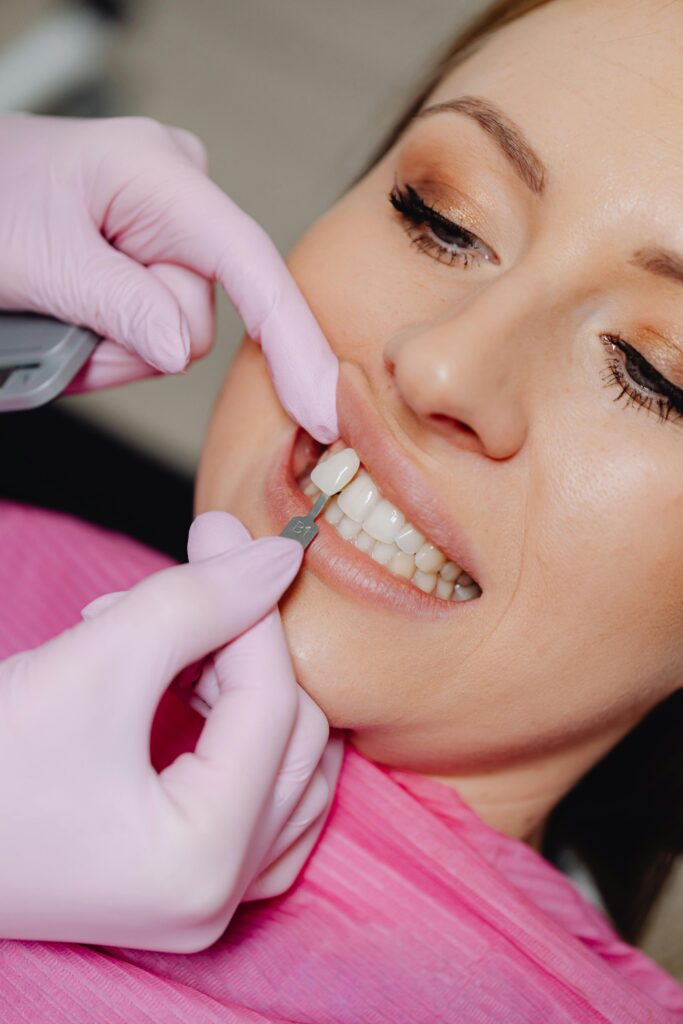
Temporary veneers also help people commit. This is an underrated aspect of the treatment. Patients can preview the proposed length and shape in the mouth before the final porcelain is bonded. That lowers anxiety. It turns an abstract plan into something tangible. In many cases, adjustments made during the temporary phase improve the final result.
When patients feel they can see the destination before the treatment is finalized, acceptance rises. That preview step gives veneers a practical advantage over procedures where the final cosmetic outcome is harder for a patient to imagine.
Social and professional factors have amplified demand
A generation ago, many people only paid close attention to their smile in the mirror or in printed photos. Now faces are under constant digital inspection. Front-facing phone cameras, video meetings, social media, and high-resolution photography have made even minor asymmetries more visible to the person living with them.
That does not mean everyone needs cosmetic dentistry. It does mean awareness has increased. People notice worn edges, dark corners, short front teeth, and color inconsistency in ways they might not have before. The demand for veneers reflects that shift.
Professional image plays a role as well. Patients in client-facing work, media, sales, law, hospitality, and healthcare often say the same thing in different words: they want their smile to match the level of polish they bring to the rest of their appearance. Not perfect, just intentional. Veneers are popular because they can deliver that polished effect quickly and predictably.
Results can be customized far more than people expect
One reason some people hesitate is fear of getting the wrong style of smile. They have seen examples that look too white, too square, too bulky, or too uniform. That concern is fair, and it usually points to design choices rather than a flaw in the treatment itself.
Porcelain veneers are not a one-style procedure. They can be youthful or subdued, brighter or softer, more feminine or more masculine in line angles and contours, broader or more delicate depending on facial proportions. The shape of the arch, the amount of tooth display at rest, gum symmetry, and lip dynamics all influence the design.
This customization explains why veneers can satisfy very different patient goals. One patient may want a barely noticeable refinement, enough to erase years of wear and make the smile look healthier. Another may want a more striking transformation after multiple pregnancies, acid erosion, or old dental work that never matched properly. Both may choose veneers, but the final designs should not look remotely the same.
The phrase “natural-looking veneers” is often overused, yet it points to a real standard. Natural does not mean dull. It means proportionate, believable, and integrated with the face.
They can be conservative, but they are not reversible in the casual sense
Popularity sometimes creates oversimplified messaging, and this is where a more experienced view matters. Veneers can be conservative, especially compared with full crowns, but they still involve permanent alteration in many cases. Enamel is usually reduced to make room for the porcelain and avoid overbulking. The amount may be modest, but it is not trivial.
That is why good case selection matters more than marketing language. If a patient has healthy teeth with only minor cosmetic concerns, direct bonding, contouring, whitening, or orthodontics may be a better first move. Veneers become more compelling when they solve real structural or aesthetic problems that less invasive options cannot address as well.
A careful consultation should cover what veneers can do, what they cannot do, and what maintenance will likely be needed. Patients deserve to understand that although veneers resist staining and can last a long time, they are not indestructible. Grinding, nail biting, using teeth as tools, and an unstable bite can shorten their lifespan.
The best cosmetic decisions are rarely made from excitement alone. They come from matching the treatment to the biology, the bite, the goals, and the patient’s willingness to maintain the result.
Cost influences perception, but so does value
Porcelain veneers are not inexpensive. That is part of their identity in the public mind. Yet their popularity has held because patients often see them as https://travisphtn885.lumenforgex.com/posts/what-dentists-wish-patients-knew-about-veneers high-value rather than simply high-cost. When a treatment changes the appearance of the most visible teeth in a durable way, the emotional return can be substantial.
People tend to evaluate value through several lenses at once. They consider longevity, appearance, maintenance, confidence, and whether the treatment spares them from cycles of patchwork repairs. Someone who has repeatedly whitened, repaired bonding, or replaced mismatched fillings may decide that veneers offer a more satisfying long-term path.
That said, price should not push a patient into treatment they do not need. Dentistry is full of gray areas where more than one good option exists. A trustworthy clinician should be willing to explain alternatives candidly, even when the alternative is simpler and less profitable.
Where veneers shine, and where they do not
Porcelain veneers are at their best when the underlying teeth are reasonably healthy, the gums are stable, and the bite can support the planned changes. They excel in patients who want to improve front-tooth color, shape, wear, or mild alignment concerns while preserving a realistic appearance.
They are less ideal when major orthodontic movement is needed, when severe bruxism is unmanaged, or when decay and gum disease are the primary issues. In those cases, starting with veneers can be like painting over structural problems. The result may look good briefly, but the foundation will not support it.
A useful way to think about candidacy is to separate cosmetic dissatisfaction from functional instability. Veneers work beautifully when function is sound and appearance needs refinement. They work poorly as a shortcut around untreated disease or a chaotic bite.
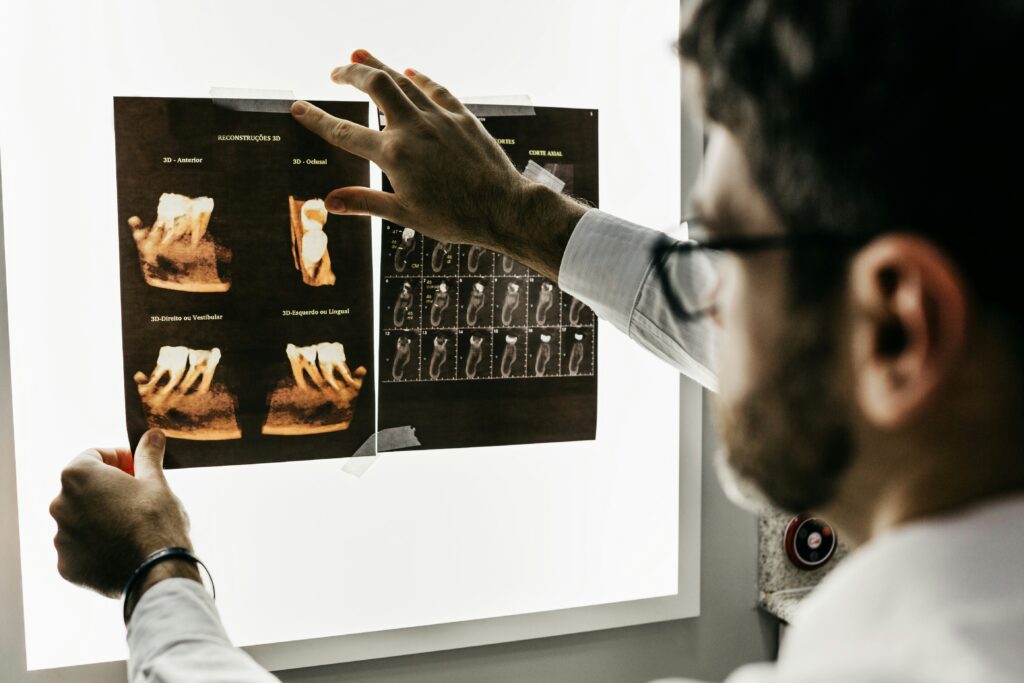
Patients considering veneers should expect a dentist to assess more than shade and shape. Photographs, bite analysis, gum line evaluation, and sometimes trial mock-ups are all signs of a careful process. Rushing through those steps may still produce a dramatic result, but not necessarily a lasting or elegant one.
The emotional result is often bigger than the physical change
One of the most consistent patterns in cosmetic dentistry is that the technical improvement and the emotional response are not measured on the same scale. A millimeter of added length, a corrected midline illusion, or a better match in value and translucency may seem subtle to an outsider. To the patient, it can feel transformative.
Many people with chipped, darkened, or worn front teeth have learned to smile with restraint. They cover their mouth when laughing. They angle their face in photos. They avoid broad smiles during presentations or social events. When veneers remove the feature they have been managing around for years, the effect often reaches well beyond appearance.
That emotional impact is one reason veneers remain so popular despite their cost and permanence. Patients are not only buying porcelain. They are buying relief from self-consciousness, consistency in how their smile looks across lighting and photos, and the ability to stop thinking about a problem every time they speak or grin.
What experienced dentists tend to emphasize
When veneer cases go well, the conversation beforehand was usually thoughtful rather than flashy. Patients had clear goals. The dentist discussed alternatives. The lab work was strong. The design respected facial proportions, speech, and bite. Expectations were optimistic but grounded.
In practical terms, the strongest veneer cases usually share a few traits:
- the patient wants improvement, not a copied smile from someone else
- the treatment plan accounts for bite forces and parafunctional habits
- the shade is chosen with restraint, not just for brightness
- the number of teeth treated is based on harmony, not sales pressure
- temporaries or mock-ups are used to test aesthetics before final bonding
Those details may sound technical, but they explain why some veneer results age gracefully and others quickly feel dated or fragile. Popularity has made the treatment widely visible. Skill still determines whether the result deserves that popularity.
Why porcelain veneers continue to hold their place
Dental trends come and go, but porcelain veneers have stayed relevant because they meet a real need with unusual efficiency. They offer a combination that is hard to match: lifelike appearance, stain resistance, durability, and the ability to improve several cosmetic concerns in a coordinated way.
Their popularity is not simply about celebrity culture or social media influence, though those factors have certainly increased awareness. It is more about fit. Veneers fit the needs of adults who want a meaningful smile upgrade without years of treatment, and they fit the clinical reality that many cosmetic problems are layered rather than isolated.
At their best, veneers do not erase personality. They remove distractions. They restore balance, soften wear, and bring the smile into better alignment with the rest of the face. That is a compelling offer, and it explains why veneers remain one of the most sought-after treatments in aesthetic dentistry.
Oaks Dental
Address: 5000 Parkway Calabasas Ste 308, Calabasas, CA 91302
Phone number: +18184312000
FAQ About Veneers
How much do veneers actually cost?
The cost of dental veneers typically ranges from $250 to $2,500 per tooth, with a full smile transformation averaging anywhere from $6,000 to $20,000 depending on the material you choose. Because veneers are classified as a elective cosmetic procedure, dental insurance almost never covers them.
What is the downside of having veneers?
The main downside of dental veneers is that the process is permanent and irreversible, as a dentist must shave off a thin layer of natural tooth enamel. Other major drawbacks include increased tooth sensitivity, high financial costs, and the need to replace them every 10 to 15 years.
What happens to the teeth under veneers?
When you get veneers, a dentist shaves off a thin layer of your natural tooth enamel (about 0.3 to 0.7 millimeters). The living tooth stays intact underneath, but losing this outer layer is permanent. The tooth relies on the veneer shell for lifelong protection and cannot be left bare.