How a General Dentist Helps With Tooth Pain
Tooth pain has a way of taking over the day. A mild twinge can turn a normal lunch into an uncomfortable chore. A sharp pulse can keep someone awake for hours, make cold air feel unbearable, or turn a routine sip of coffee into a bad surprise. People often describe tooth pain as if it came out of nowhere, but in practice it usually has a story behind it. A crack that started months ago. A cavity that did not hurt until it reached deeper layers. Clenching during sleep. A gum infection that quietly built pressure until the body forced the issue.
This is where a general dentist plays a central role. Most tooth pain is first evaluated, diagnosed, and treated in a general dental office. That matters because pain in the mouth is not always straightforward. Two teeth can feel like one problem. A sinus issue can mimic a toothache. Jaw joint strain can send pain into the molars. A general dentist is trained to sort through those overlapping signals, identify the source, and decide what can be treated right away, what needs monitoring, and what requires referral to a specialist.
For many patients, the biggest mistake is waiting too long because the pain comes and goes. Intermittent pain is still pain, and often an early warning sign. Teeth rarely recover from decay, fractures, or infected pulp on their own. The earlier a general dentist sees the issue, the more likely the treatment will be simpler, less invasive, and less expensive.
Tooth pain is a symptom, not a diagnosis
One reason tooth pain can be confusing is that it means different things in different situations. A brief zing with ice water may suggest exposed dentin, a small cavity, or gum recession. Pain that lingers for 30 seconds or longer after hot or cold can point to inflammation inside the tooth. Pain when biting often raises suspicion for a cracked tooth, a high filling, or inflammation around the ligament that holds the tooth in place. Constant throbbing, swelling, or tenderness to touch may indicate an abscess or advanced infection.
Patients often ask whether the severity of pain reflects the severity of the problem. Sometimes it does, but not always. A tiny crack in exactly the wrong spot can hurt more than a large cavity. On the other hand, a dead tooth can stop hurting even while infection continues around the root. That is one reason self-diagnosis based on pain alone is unreliable.
A general dentist does more than confirm that something hurts. The job is to determine why it hurts, how deep the problem goes, whether the tooth can be saved predictably, and what sequence of care makes the most sense. Good diagnosis is not guesswork. It comes from listening carefully, examining the tooth and surrounding tissues, and testing how the area responds under controlled conditions.
What happens during a dental evaluation for tooth pain
A productive pain visit usually begins with details that can seem small but are clinically useful. When did the pain begin. Is it triggered by cold, heat, sugar, pressure, or nothing at all. Does it wake you at night. Is the pain sharp, dull, throbbing, or radiating. Has there been recent dental work. Has there been trauma, even something as simple as biting down on a popcorn kernel or ice.
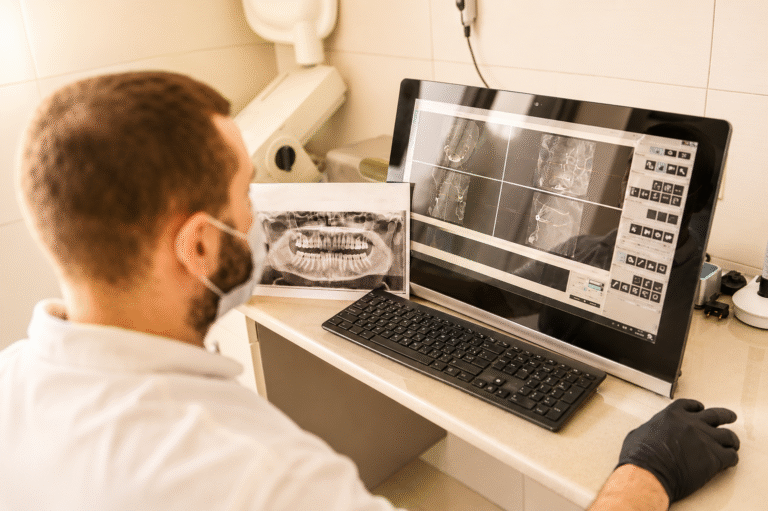
Then comes the exam. A general dentist will look at the tooth, the surrounding gum tissue, and the bite pattern. The dentist may gently tap on the tooth, test temperature response, use instruments to detect soft areas from decay, and evaluate whether the pain occurs during biting or release. In many cases, dental X-rays are essential. They can reveal cavities between teeth, infection around the root tip, failing fillings, bone loss, impacted teeth, and other conditions that cannot be seen directly.
Not every painful tooth shows the whole problem on an X-ray, and not every dramatic X-ray finding causes symptoms. That is where clinical judgment matters. The dentist matches the image to the history and the physical findings. A skilled general dentist does this every day. That combination of pattern recognition and hands-on testing is often what gets the patient from uncertainty to a clear plan.
Common causes of tooth pain a general dentist treats
Cavities are the obvious example, but they are far from the only one. Tooth decay remains one of the most frequent causes of pain because it gradually moves inward. The outer enamel has no nerves, so decay can progress silently for some time. Once it reaches dentin, sensitivity often starts. If it reaches the pulp, where the nerve and blood supply live, the pain can become intense and spontaneous.
Cracked teeth are another common source, especially in adults who grind their teeth or have heavily restored molars. The crack may be invisible to the naked eye. Patients often describe this pain as a sharp jolt when chewing, especially on release. These cases can be tricky because the tooth may look fairly normal. A general dentist often diagnoses them by combining the patient’s history with bite tests and magnification.
Gum disease can also cause pain, particularly when a gum abscess forms. In that situation, the problem may not begin inside the tooth at all. Food debris, deep periodontal pockets, or bacteria trapped under the gum can create localized swelling and tenderness. Patients sometimes point to one sore area and assume the tooth itself is infected, but the general dentist may find that the supporting tissues are the real issue.
There are also cases tied to previous dental work. Fillings can wear out, leak around the edges, or shift the bite slightly. A crown may loosen. A recent filling may leave the tooth temporarily sensitive, especially if the cavity was deep, though lingering or worsening pain deserves evaluation. Wisdom teeth can contribute as well, https://www.google.com/maps?cid=11867611376950550291 particularly when they partially erupt and trap bacteria under a flap of gum tissue.
Then there are the less obvious culprits. Clenching and grinding can inflame the periodontal ligament, making teeth feel sore and overworked. Sinus pressure can create pain in upper back teeth. Recession can expose root surfaces and make cold sensitivity seem dramatic. A general dentist is often the first professional to separate these patterns from true decay or infection.
How a general dentist narrows down the cause
The diagnostic process is part science, part methodical elimination. If cold triggers pain that disappears quickly, the issue may be reversible sensitivity. If heat causes severe lingering pain and the tooth is tender to pressure, the nerve may be irreversibly inflamed. If there is swelling near the gumline and the tooth does not respond normally to vitality testing, infection may have spread beyond the root.
In everyday practice, one of the hardest parts is identifying referred pain. The brain is not always precise when it comes to dental nerves. A patient may swear the lower right first molar is the culprit, while the actual source is the second molar behind it. Sometimes the upper teeth feel painful when the sinus is inflamed. Sometimes jaw muscle tension from night grinding creates an ache that mimics a tooth problem. A general dentist expects that ambiguity and works through it instead of treating the first tooth that seems suspicious.
This careful approach protects patients from unnecessary procedures. No one wants a filling, root canal, or extraction on the wrong tooth. A measured diagnostic visit may feel slower than expected, but it usually prevents a much larger problem.
The treatments a general dentist may recommend
Once the cause is clear, the next step is selecting the least invasive treatment that has a good long-term prognosis. For early or moderate decay, that may mean removing the damaged area and placing a filling. Modern fillings can be completed in one visit and are often enough to eliminate pain if the nerve has not been deeply affected.
If a tooth is structurally compromised, a crown may be recommended. This is common for large fractures, old fillings that no longer support the tooth well, or after root canal treatment. A crown does not just cover the tooth for appearance. It redistributes biting forces and can prevent a weakened tooth from splitting further.
When the pulp inside the tooth is infected or irreversibly inflamed, a root canal may be the best option. This treatment removes the diseased tissue from inside the root canals, disinfects the space, and seals it. Despite its reputation, a root canal is often what relieves severe pain rather than causing it. Patients are frequently surprised by how manageable the appointment feels once the tooth is numb and the pressure is addressed.
If the tooth cannot be saved predictably because of a vertical root fracture, extensive decay below the gumline, or severe structural loss, extraction may be the most responsible choice. A good general dentist does not rush to remove teeth, but also does not oversell heroic treatment when the odds are poor. Part of professional judgment is recognizing when preserving a tooth will likely lead to repeated failure, recurring pain, and higher cost.
For gum-related pain, treatment may involve deep cleaning, irrigation, drainage of an abscess, or improved home care around a difficult site. If the cause is bite trauma from clenching, the general dentist may adjust a high spot on a restoration, recommend a night guard, or monitor symptoms after reducing pressure on the tooth.
Antibiotics have a role in some cases, especially when there is spreading infection, facial swelling, fever, or lymph node involvement. They are not a cure for most toothaches by themselves. An infected pulp does not heal because of antibiotics alone. The source usually still needs definitive dental treatment, whether that is a filling, root canal, gum therapy, or extraction.
Pain relief starts before the final procedure
Many people assume they need to endure pain until the full treatment can be scheduled. In reality, a general dentist can often provide meaningful relief even when the complete repair comes later. Draining an abscess, smoothing a rough fracture edge, placing a sedative dressing in a deep cavity, adjusting the bite, or opening a tooth to release pressure can make a major difference quickly.
That early relief matters. Sleep improves. Eating becomes possible again. Stress drops. When patients are no longer in crisis, they tend to make better decisions about long-term care. Pain has a way of narrowing focus. One of the quiet strengths of a good general dental office is the ability to stabilize a problem first, then finish treatment in a more controlled setting.
When tooth pain means you should call right away
Some dental pain can wait a day or two for an appointment. Some should not. A general dentist will usually want to hear about certain symptoms as soon as they appear because they may signal infection spreading or a worsening condition.
- swelling in the face, gums, or jaw
- fever along with tooth pain
- difficulty swallowing or opening the mouth normally
- pain after trauma, especially if a tooth feels loose or looks displaced
- a bad taste or drainage near the tooth with increasing pressure
These signs do not always mean a hospital visit is necessary, but they raise the urgency. If swelling is progressing quickly, breathing feels affected, or the person is medically vulnerable, the threshold for emergency care becomes much lower.
What patients can do before the appointment
Home care does not fix the underlying cause, but it can help keep the situation from getting worse while waiting to see the dentist. A gentle saltwater rinse may soothe irritated gum tissue. Over the counter pain medicine can reduce discomfort if the patient can safely take it. Avoiding very hot, very cold, and very sugary foods often helps. Chewing on the opposite side can prevent a crack or inflamed ligament from being aggravated further.
What generally does not help is applying aspirin directly to the gum, using leftover antibiotics from another illness, or postponing care because the pain faded for a few hours. Those are common habits, and they usually complicate things. Chemical burns from aspirin are not rare. Partial antibiotic use can muddy the clinical picture without solving the problem. And temporary quiet does not mean the disease process stopped.
If there is a broken tooth, it is worth bringing any piece that can be found to the appointment, though many fragments cannot be reattached. If a tooth has been knocked out completely, time becomes critical, and the patient should contact a dentist immediately. In the right circumstances, prompt action can improve the chance of saving the tooth.
Children, older adults, and people with dental anxiety need a different approach
A general dentist often adapts the evaluation depending on the patient. Children may not point accurately to the tooth that hurts, and they may describe pressure or sensitivity simply as “it feels funny.” Tooth pain in children can stem from cavities, erupting teeth, trauma, or infections that move quickly because baby teeth have thinner enamel. The exam needs patience and a calm pace.
Older adults can present a different set of challenges. Receding gums expose root surfaces that decay more easily. Existing crowns, bridges, and large fillings may hide recurrent decay. Dry mouth from medications can accelerate cavities dramatically. In this group, tooth pain may show up later than expected because the nerve has already declined in vitality. A general dentist has to read both the current complaint and the history of restorations that came before it.
Dental anxiety changes the picture too. Some patients delay until the pain becomes unbearable because fear of the appointment is stronger than fear of the cavity. In my experience, these visits go best when the dentist explains what is being checked, what the likely causes are, and what can be done in stages. Patients handle treatment better when they understand the sequence and know that the first goal is comfort.
The value of seeing the same dentist over time
There is a practical advantage to continuity of care. A general dentist who has seen your previous X-rays, tracked old fillings, and noticed changes in grinding patterns can often interpret new pain more quickly. Small clues matter. A faint crack line noted last year may explain today’s biting pain. A tooth that tested borderline months ago may now show a clear shift. Records provide context, and context improves decisions.
This is also where preventive care intersects with pain management. Regular cleanings and exams are not only about maintaining appearance or checking a box with insurance. They give the general dentist a chance to catch a worn filling, deepening pocket, or area of demineralization before it escalates into a weekend toothache. In dentistry, prevention often looks unremarkable in the moment, but it saves people from the most disruptive version of the problem.
Not every painful tooth needs the most aggressive treatment
One of the more nuanced parts of general dentistry is knowing when to monitor. A tooth that is mildly sensitive for a few days after a new filling may settle down without further intervention. A hairline enamel crack without symptoms may simply need observation and protection from grinding. A reversible pulpitis case, where the nerve is irritated but not irreversibly damaged, may improve once decay is removed and the tooth is sealed.
At the same time, under-treatment creates its own problems. Deep lingering pain, spontaneous aching, or swelling should not be managed with wishful thinking. The challenge is balancing restraint with decisiveness. The best general dentists are not those who do the most treatment. They are the ones who match the treatment to the biology and explain why.
Cost, timing, and real-world decision making
Patients do not experience tooth pain in a vacuum. They have work schedules, childcare limits, insurance restrictions, and financial realities. A professional treatment plan has to be clinically sound, but it also has to be realistic enough to happen. Sometimes that means staging care. Perhaps the painful tooth is treated first, while less urgent restorations are scheduled later. Sometimes it means discussing the trade-off between saving a tooth with root canal therapy and crown placement versus removing it and planning replacement.
These are not purely technical choices. They involve prognosis, function, appearance, and budget. A thoughtful general dentist explains the likely lifespan of each option, what maintenance it requires, and what happens if treatment is delayed. Patients tend to appreciate straightforward guidance. They do not need pressure. They need a clear read on the problem and an honest sense of what each path involves.
Preventing the next toothache
The lessons from a painful tooth often become obvious only afterward. The filling that kept snagging floss should have been checked earlier. The night grinding that wore the front teeth flat was not just cosmetic. The skipped cleanings allowed a small cavity to reach the nerve. None of this is about blame. It is about pattern recognition and using the experience to avoid a repeat.
For many adults, prevention comes down to a few habits that are not glamorous but are effective.
- brushing thoroughly twice a day with fluoride toothpaste
- cleaning between the teeth daily
- keeping regular dental exams and cleanings
- limiting frequent sugary snacks and drinks
- wearing a night guard if clenching or grinding is a known issue
Those measures will not eliminate every dental problem, but they significantly reduce the chances of the sudden, sleep-stealing kind of pain that sends people searching for urgent help.
A toothache feels personal and immediate, but the response to it should be systematic. A general dentist helps by turning a vague, stressful symptom into a concrete diagnosis and a practical treatment plan. Sometimes the fix is simple. Sometimes it involves several steps. Either way, the value lies in identifying the true source of pain, relieving it safely, and protecting the tooth, or the surrounding tissues, from further damage. That is the everyday work of general dentistry, and when tooth pain strikes, it is often exactly the kind of care people need most.
Smyle Dental Newhall
Address: 23754 Newhall Ave, Santa Clarita, CA 91321
Phone number: +16612559200
FAQ About General dentist
What does it mean by general dentist?
A general dentist is your primary dental care provider. They focus on the overall prevention, diagnosis, and treatment of your daily oral health needs. Think of them as your primary care doctor, but for your teeth and gums.
What is the difference between a dentist and a general dentist?
A dentist is a broad professional title for any licensed oral healthcare provider, while a general dentist is a specific type of primary care dentist who focuses on routine, preventive, and everyday treatments.
What is the difference between a dentistry practitioner and a dentist?
A dentist is a licensed doctoral-level healthcare professional, whereas a dental practitioner is a broader umbrella term that can include dentists as well as other trained oral health professionals.